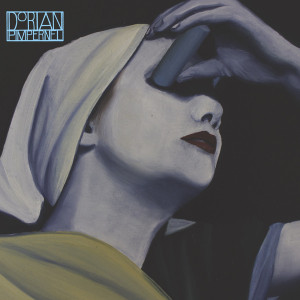
What is pop doing today? It fills our heads; sometimes it lifts us up. It invents sparingly, it plunders a little, it copies a lot. It still accompanies us; it also torments us. It exhilarates us from time to time; it often diminishes us. But what it hardly does anymore is make us dream — truly dream, with our eyes open as well as closed.
That is precisely where Dorian Pimpernel returns.
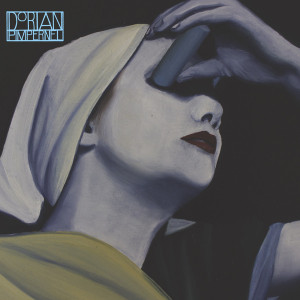
For if their first album ALLOMBON could be seen as the opening of a secret passage, this second record, FLOWERS TOO, is something else entirely: no longer the discovery of a world, but its methodical exploration, its feverish mapping, its deepening down to the underground layers. At a time when contemporary psychedelia seems at a standstill, when ecstasy has lost its effect, when the vast territories of the imagination have been parceled out, signposted, monetized — they keep digging. And deeper still.
Esoteric pop — the noblest, the most dangerous kind — is no longer practiced on the surface. It has abandoned the grand avenues to retreat into hidden laboratories, mental back rooms, basements more deeply buried than those of garage, punk, or black metal. It is there that the secret society Dorian Pimpernel has been working for years, with a stubbornness that feels less like a career than a calling.
Their first album laid the foundations of a language, a climate, a possibility. This one is its inner chamber.
The five members — the drummer fascinated by Antiquity, the part-time philosopher-songwriter, the polymorphous filmmaker-composer, the bassist-archivist possessed by records, the singer long secluded with his guitar — have not changed in nature. But their music has mutated. Denser. More coherent. More inhabited.
Still operating on the margins of the classic “group of friends starting a band” model, they pursue their strange project: moonshine pop — the nocturnal, lunatic, sometimes venomous reverse side of Californian sunshine pop. Except that here, the concept is no longer an aesthetic hypothesis — it is a territory. Johan no longer speaks of a sketch, but of a world. A world built brick by brick, record by record, where every sound, every timbre, every intention has its place, like in a secret architecture.
If the first album opened the door, this second one pushes you inside — so far that it will be your dreams, and perhaps your nightmares, that must welcome the creatures dwelling there.
In the manner of those half-literary, half-magical books of the Renaissance, this record functions as a closed yet infinite system. Each song is at once fragment and totality: autonomous, yet perforated, inhabited by the vertiginous feeling that other rooms, other corridors, exist just next door. The whole forms a labyrinth whose map one may study… or choose to get lost within.
For whether one is a manic exegete or a simple nocturnal wanderer, one thing strikes first: this is pop.
Grand melody. Immediate, supple, luminous — even when it speaks from the shadows. If their art partakes of esotericism, it does so in the manner of Alice in Wonderland: gently, colorfully, with a smile that conceals abysses.
Their influences are still present, but more deeply digested: the learned psychedelia of the ’60s, the imagined bridges between Canterbury and Düsseldorf, haunted film scores, rare synthesizers and vintage guitars that populate their studio-cabinet of curiosities. Except that here, none of it is quoted anymore — it breathes. It lives. It acts.
One might speak of a French hauntology, but one less concerned with nostalgia than with activating ghosts. As if they were speaking an ancient language — yes — but in such a way that it fully belongs to the new world, even if that world does not yet know it needs it.
On the surface, this music seems to come from yesterday.
In depth, it is strictly contemporary: ambiguous, shimmering, unstable, vibrant. But also — and above all — harmonious, immediate, deliciously toxic, of an almost suspect beauty.
The real surprise is that this second album already possesses the density of a mature work. In its themes — lost illusions, roads leading nowhere, parallel worlds brushed against but never inhabited — as in its form: no longer merely a proposition, but a fully realized manifesto.
The dream machine has been restarted.
And this time, it runs without an instruction manual.
1. Chlorine Fumes
2. Twisted Charm Honey
3. Caravelle
4. Flor En La Sombra
5. Marching Clocks
6. Circular Rites
7. Oruga Encantada
8. Sur La Lune
9. Brucke
10. Photochromic Gaze
11. A Rising Year